Top 10 countries with the most forex traders 

The Forex market’s landscape is constantly evolving, with various countries emerging as key players based on the number of active traders. 

In 2023, according to data provided by Forex Broker Report, there’s been a significant global distribution of Forex traders. This spread is largely influenced by the intricate dynamics of advanced financial systems and regulatory frameworks. 
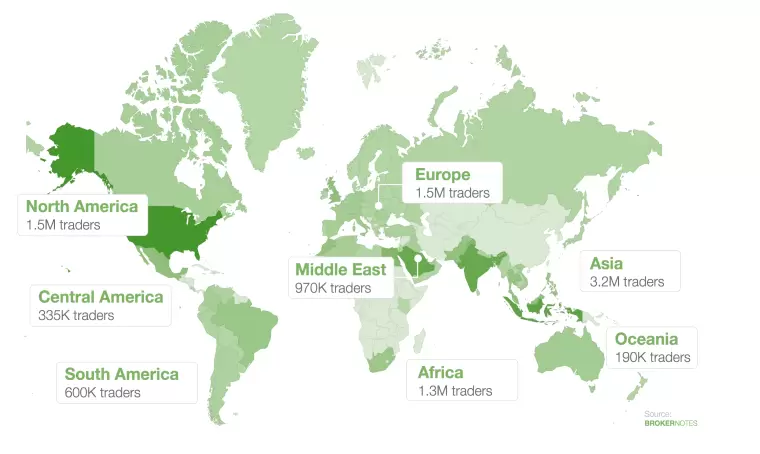
The regional distribution of online Forex traders
Source: Broker Notes

The global distribution of online Forex traders, as highlighted in the ForexBrokers.com report, shows a notable regional variance: Asia leads with 3.2 million online traders, Europe follows with 1.5 million, and Africa with 1.3 million, while the United States also shows a substantial presence in the Forex market. These figures underscore the widespread popularity and varied levels of Forex trading engagement across different regions. 

As we delve into the top 10 countries at the forefront of Forex trading, each presents a unique combination of attributes and challenges within their Forex markets. 

1. United Kingdom (341,000 Traders) 

The UK, especially London, is not just Europe’s but one of the world’s foremost financial hubs. The Financial Conduct Authority (FCA) provides robust regulation, ensuring transparency and trader protection. London’s time zone advantageously positions it to capitalise on both Asian and American market hours, enhancing its Forex trading activity. 

2. United States (335,000 Traders) 

The U.S. boasts a highly developed financial market with extensive Forex trading activity. The regulatory environment, overseen by organisations like the CFTC and NFA, ensures a secure trading platform for a diverse array of traders. The U.S. dollar’s dominance in global finance further amplifies the country’s role in the Forex market. 

3. Japan (223,000 Traders) 

Japan’s Forex market has witnessed exponential growth since retail Forex trading was legalised in 1998. The Japanese yen, a major currency in Forex markets, is often involved in carry trades due to Japan’s low-interest-rate environment. The Financial Services Agency (FSA) maintains a well-regulated trading environment, balancing openness with trader protection. 

4. Singapore (218,000 Traders) 

As a critical financial centre in Asia, Singapore’s strategic location enables significant trading overlap with global markets. The Monetary Authority of Singapore (MAS) is known for its stringent regulatory standards, fostering a secure and efficient trading environment. Singapore’s advanced technological infrastructure also contributes to its robust Forex market. 

5. Hong Kong (200,000 Traders) 

Hong Kong stands as a significant gateway to Asian markets, with a stable economy and a strong regulatory framework. The Hong Kong dollar is a crucial currency in Forex markets, and the region’s proximity to mainland China adds to its strategic trading position. Hong Kong’s sophisticated financial services sector attracts traders globally. 

6. Australia (195,000 Traders) 

Australia’s Forex market is underpinned by its resource-driven economy and political stability. Regulated by the Australian Securities and Investments Commission (ASIC), the market offers a safe environment for traders. The Australian dollar, a commodity currency, is highly influenced by the country’s trade dynamics, particularly with China. 

7. Switzerland (182,000 Traders) 

Switzerland’s reputation for financial stability and banking secrecy makes its Forex market attractive. The Swiss Franc, a safe-haven currency, is a popular choice during global economic uncertainties. Switzerland’s Forex market benefits from its neutrality and the country’s stringent regulatory practices. 

8. France (120,000 Traders) 

France’s Forex market is integral to the Eurozone. The Euro’s strength and stability, combined with France’s significant economic position in Europe, make it a key player in Forex trading. The Autorité des Marchés Financiers (AMF) ensures a well-regulated trading environment. 

9. Germany (109,000 Traders) 

Germany’s robust economy and the Euro’s prominence bolster its Forex market. Germany’s Forex trading is influenced by its strong industrial and export sectors. The Federal Financial Supervisory Authority (BaFin) provides a stringent regulatory framework, ensuring market integrity. 

10. China (105,000 Traders) 

China’s growing Forex market reflects its rising economic power. The Chinese Yuan’s increasing inclusion in global Forex trading symbolises China’s expanding financial influence. However, the market is more regulated and less open than in other major countries, with strict oversight from the People’s Bank of China and SAFE. 

In conclusion, the Forex trading landscape in 2023 highlights the diversity and dynamism of global financial markets. Each of the top 10 countries offers unique advantages and challenges, shaped by their respective economic conditions, regulatory frameworks, and currency strengths. These nations not only provide significant opportunities for Forex traders but also play a crucial role in shaping the future of international finance and trade. 
Decoding the forex dilemma: Manual trading vs. algorithmic trading 

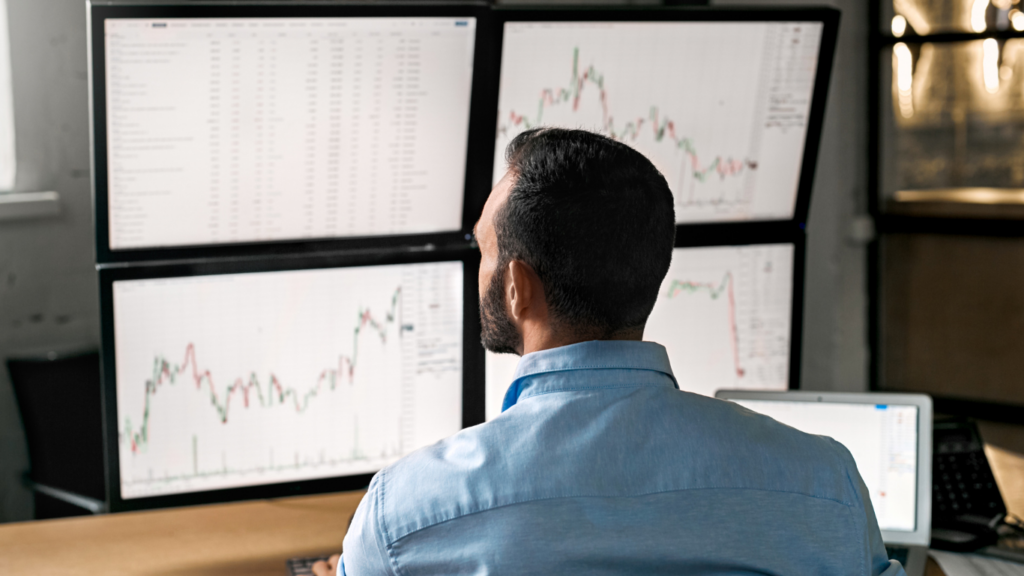
Manual trading vs. algorithmic trading 

source: Forbes

In the fast-paced world of Forex trading, where fortunes can be made or lost in the blink of an eye, the importance of selecting the right trading approach cannot be overstated. 

Today, over 70% of traders rely on algorithmic trading methods, as revealed by the research report “Predictive Assessment of Electronic Trade Dynamics: 2022-2027“. This staggering statistic underscores the prevalence and influence of algorithmic trading in the contemporary financial landscape. 

Understanding the nuances of both manual and algorithmic trading is crucial for non-professional traders to navigate these complexities successfully. Let’s delve into these approaches, exploring their intricacies and uncovering the key considerations that can shape the success of Forex trading. 

Manual Trading: The Art of Hands-On Decision-Making 

Involving a traditional, hands-on approach where traders rely on intuition and market analysis, manual trading provides a unique learning experience and enables the exercise of emotional control. 

This method offers a practical learning environment, allowing traders to engage directly with the market. For instance, envision a trader meticulously analysing historical price charts, identifying key support and resistance levels, and anticipating a trend reversal based on a combination of technical indicators and economic factors. 

Actively participating in decision-making processes, manual trading helps traders develop emotional control – a crucial aspect of success. Consider a scenario where a trader, faced with a sudden market downturn, resists the impulse to panic sell and instead relies on their analysis to make rational decisions, avoiding potentially significant losses. 

However, manual trading has its challenges. The time-intensive nature demands constant attention, making it challenging for traders with busy schedules. Emotional challenges remain prevalent, and the limited capacity for multitasking can hinder a trader’s ability to seize multiple opportunities simultaneously. 

To illustrate, imagine a manual trader who, after studying market conditions, identifies a potential breakout in a currency pair. This trader monitors the charts, patiently waiting for the opportune moment to enter the market. When the anticipated reversal occurs, the trader executes a well-timed trade, capitalising on insights gained through hands-on analysis. 

In essence, manual trading offers a personalised and engaging experience for traders willing to invest time and effort into understanding the intricacies of the Forex market. While it requires discipline and focused attention, the skills acquired through manual trading can be invaluable for those seeking a deep connection with their trading strategies. 

Algorithmic Trading: The Precision of Automated Decision-Making 

In stark contrast to manual methods, algorithmic trading relies on automated execution and data-driven decisions, emphasising speed, efficiency, and systematic strategy application. 

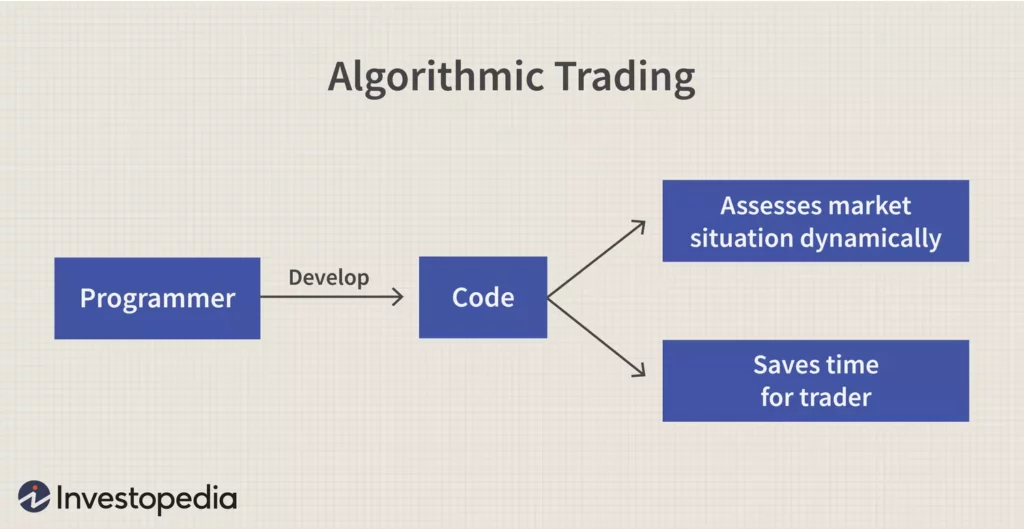
Algorithmic trading excels in speed and efficiency, processing vast market data in milliseconds. An example is an algorithm identifying and capitalising on price discrepancies across markets, executing trades instantaneously. 

Algorithmic trading model
source: Investopedia

Crucial to algorithmic trading, backtesting validates strategies using historical data, minimising the risk of flawed analysis. Imagine a trader developing an algorithm identifying profitable trends through historical price movements, ensuring viability before live application. 

Despite its advantages, algorithmic trading has complexities. A steep learning curve demands proficiency in programming and data analysis. Over-reliance on historical data poses risks, as strategies may lose effectiveness in rapidly changing markets. 

Consider a trader developing a sophisticated algorithm with machine learning techniques, allowing anticipation of price movements accurately and consistently yielding profits by adapting to evolving market conditions. 

Algorithmic trading comes with risks, including system failures and technical challenges. Traders must be vigilant to address potential issues promptly, as glitches or failures could lead to unintended consequences. 

In essence, algorithmic trading offers an efficient, systematic approach to Forex trading. Despite technical demands and potential risks, a well-designed algorithm has the potential to unlock consistent profits in the ever-evolving financial landscape. 

Factors to Consider: Choosing Between Manual and Algorithmic Trading 

When faced with the decision between manual and algorithmic trading, a careful evaluation of several key factors can significantly impact your trading journey. 

Factor 1. Risk Tolerance: 

  • Manual Trading: Ideal for those comfortable with risk, offering flexibility and adaptability. 
  • Algorithmic Trading: Suited for risk-averse individuals, providing a disciplined and controlled approach. 

Factor 2. Time Commitment: 

  • Manual Trading: Demands constant attention and time investment. 
  • Algorithmic Trading: Offers automation, saving time for exploring opportunities and strategy refinement. 

Factor 3. Skill Level: 

  • Manual Trading: Requires a deep understanding of market dynamics and analysis. 
  • Algorithmic Trading: Involves programming and data analysis skills. 

In summary, align your trading approach with your risk tolerance, time commitments, and skill set to make an informed decision between manual and algorithmic trading. 

For example, a computer science-savvy trader might excel in algorithmic trading, leveraging programming skills. Meanwhile, a trader attuned to market psychology may find success in manual trading. 

Each method has unique benefits, ensuring a strategic fit for your preferences and enhancing your success in Forex trading. 

Combining Manual and Algorithmic Trading: The Power of Hybrid Strategies 

As technology and trading methodologies evolve, the concept of hybrid trading has emerged as a compelling strategy for traders seeking the best of both worlds. By combining manual and algorithmic approaches, traders can capitalise on the strengths of each method, creating a versatile and adaptive trading strategy. 

source: Freepik

Intuitive Decision-Making with Efficiency 

Hybrid trading combines manual intuition with algorithmic efficiency. Traders leverage the strengths of both approaches – making informed decisions based on market understanding while benefiting from the speed and precision of automated execution. 

Risk Management at the Core 

Central to hybrid trading is robust risk management. Traders can swiftly adapt to changing market conditions by switching between manual and algorithmic modes. This dynamic approach enhances risk mitigation, allowing traders to navigate diverse market scenarios with agility. 

A trader, combining economic insight with sentiment analysis algorithms, may switch between manual and algorithmic modes based on market events. This adaptability ensures critical decision-making during unexpected situations. 

Continuous Adaptation and Learning 

Hybrid traders embrace continuous adaptation and learning. The synergy between manual and algorithmic methods enables real-time strategy refinement, crucial in the ever-changing Forex market. 

Optimising Strengths, Minimising Weaknesses 

By combining manual and algorithmic trading, traders aim to optimise strengths while mitigating weaknesses. Manual trading adapts to unique market conditions, while algorithmic trading provides efficiency in executing predefined strategies. 

VT Markets welcomes traders of all styles, whether engaging in manual or algorithmic trading. 

For manual traders, the user-friendly interfaces of MT4, MT5, and WebTrader Plus ensure a seamless and intuitive experience across Forex, indices, commodities, and other assets. Execute trades with precision and efficiency, empowered by real-time data and analytical tools. 

Alternatively, for those who prefer automated strategies, leverage the platform’s compatibility with expert advisors. Implement finely-tuned algorithmic approaches tailored to the nuances of your preferred instrument and aligned with unique trading objectives. 

In conclusion, both manual and algorithmic trading have their merits and drawbacks. Forex traders should explore both approaches, considering factors such as risk tolerance, time commitment, and skill level. Embracing a hybrid strategy and leveraging the tools and opportunities provided by platforms like VT Markets can empower traders to navigate the Forex market successfully. Continuous learning and adaptation are key in this ever-evolving financial landscape. 

Summary: 

  • Manual trading and algorithmic trading are two primary approaches to engaging in financial markets. 
  • Manual trading involves hands-on decision-making but faces challenges like time intensity. 
  • Algorithmic trading relies on automated execution but has a steep learning curve. 
  • Hybrid trading, blending manual intuition with algorithmic efficiency, is gaining popularity. 
  • Consider your risk tolerance, time commitments, and skill set when choosing between manual and algorithmic trading in Forex. 

Dividend Adjustment Notice – December 12, 2023

Dear Client,

Please note that the dividends of the following products will be adjusted accordingly. Index dividends will be executed separately through a balance statement directly to your trading account, and the comment will be in the following format “Div & Product Name & Net Volume ”.

Please refer to the table below for more details:

The above data is for reference only, please refer to the MT4/MT5 software for specific data.

If you’d like more information, please don’t hesitate to contact info@vtmarkets.com.

Week ahead: Markets to focus on rate statements from SNB, BOE, ECB, and the Fed

This week, the market’s primary focus revolves around the rate decisions of major central banks as they convene for their final meetings in 2023. Aside from these pivotal central bank decisions, the market is also keeping a close eye on the US consumer price index and producer price index, given that signs of inflation could influence the Fed’s policies during this period.

As always, traders are advised to exercise caution as we approach these upcoming market highlights for the week:

US consumer price index (12 December 2023)

Consumer prices in the US remained unchanged in October after a 0.4% increase in September.

Analysts expect no changes in the updated consumer price index for November, set to be released on 12 December.

UK monthly gross domestic product (13 December 2023)

The UK’s monthly gross domestic product (GDP) grew by 0.2% month-over-month in September 2023, following a 0.1% growth in August.

Updated figures are set to be released on 13 December, with analysts expecting the UK’s GDP to contract by 0.1%.

US producer price index (13 December 2023)

Producer prices in the US fell by 0.5% month-over-month in October 2023, marking the most significant decline since April 2020.

Analysts are forecasting an increase of 0.1% in the updated producer price index for the US, set to be released on 13 December.

The Fed’s interest rate decision (14 December 2023)

For the second consecutive time in November, the Federal Reserve maintained the federal funds rate at its 22-year high of 5.5%, a reflection of policymakers’ commitment to balancing the goal of reaching a 2% inflation target while avoiding excessive monetary tightening.

The next rate statement is slated for release on 14 December, with analysts expecting the rate to stay steady at 5.5%.

Swiss National Bank’s interest rate decision (14 December 2023)

The Swiss National Bank (SNB) unexpectedly opted to maintain its benchmark policy rate at 1.75% during its September 2023 meeting. This decision marks a temporary halt in the rate-hike campaign initiated in June of the previous year.

No change is expected in the SNB’s forthcoming rate statement, slated for release on 14 December.

Bank of England’s interest rate decision (14 December 2023)

During its November meeting, the Bank of England held firm on its benchmark interest rate, keeping it steady at a 15-year high of 5.25% for the second consecutive time. This decision comes as a response to recent indications of a slowdown in the UK’s economy coupled with the persistent challenge posed by elevated inflation.

The next rate statement is expected to be released on 14 December, with analysts expecting the rate to be maintained at 5.25%

European Central Bank’s interest rate decision (14 December 2023)

The European Central Bank (ECB) maintained its interest rates at 4.5% in October, signalling a notable departure from its 15-month trend of consecutive rate hikes. This decision underscores a shift towards a more cautious approach among policymakers, influenced by easing price pressures and apprehensions regarding an impending recession.

No change is expected in the ECB’s forthcoming rate statement, slated for release on 14 December.

US retail sales (14 December 2023)

After a 6-month stretch of growth, retail sales in the US declined by 0.1% month-over-month in October 2023.

Analysts expect another 0.1% decrease in the forthcoming retail sales data for the US, scheduled to be released on 14 December.

Dividend Adjustment Notice – December 7, 2023

Dear Client,

Please note that the dividends of the following products will be adjusted accordingly. Index dividends will be executed separately through a balance statement directly to your trading account, and the comment will be in the following format “Div & Product Name & Net Volume ”.

Please refer to the table below for more details:

The above data is for reference only, please refer to the MT4/MT5 software for specific data.

If you’d like more information, please don’t hesitate to contact info@vtmarkets.com.

Trading Titans: 10 greatest traders of all times 

Billions Showtime Series
source: Variety

In the riveting world of finance, tales of triumph and turmoil are often immortalised on both the big and small screens. If you’ve been captivated by the dazzling lives of traders depicted in popular series like “Billions,” you might be intrigued to explore the real-life counterparts who have left an indelible mark on the financial landscape. 

Beyond the drama and glamour of television, these master traders have reshaped markets, defied the odds, and amassed fortunes that rival even the most vivid Hollywood imagination. 

1. George Soros: The Speculator Extraordinaire 

Estimated net worth: $8.5 billion (2022) 

Source of wealth: Hedge fund management 

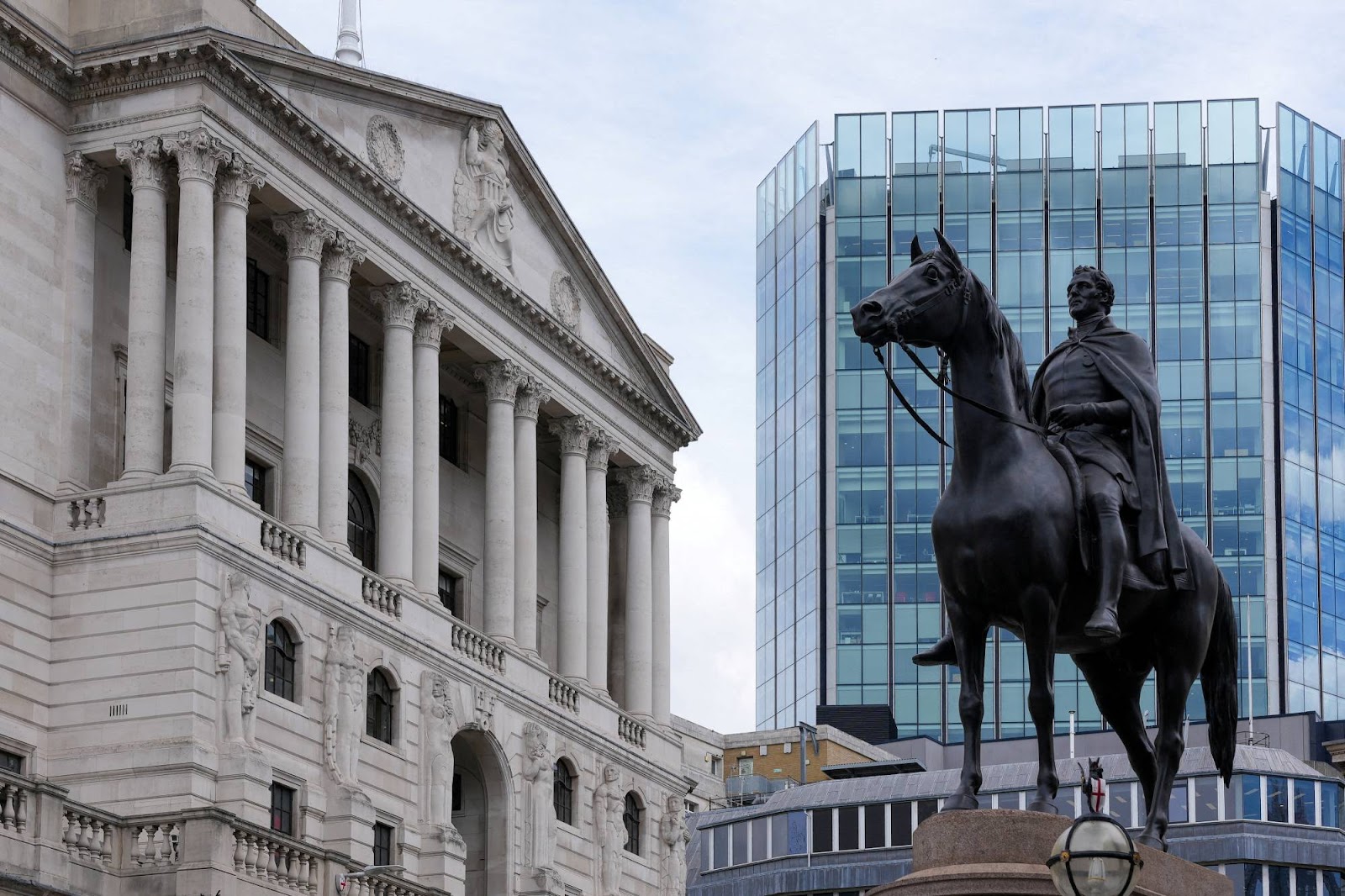
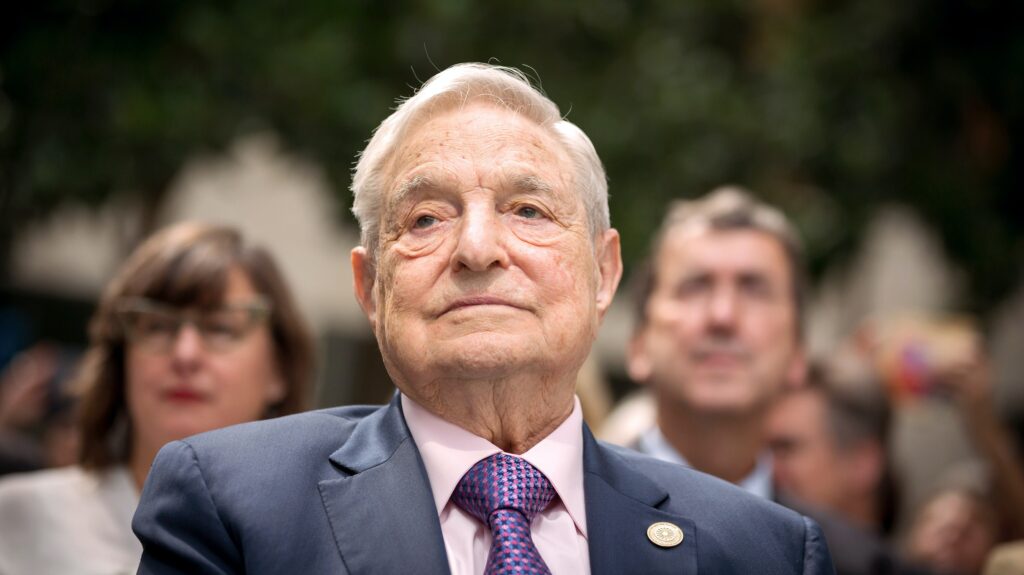
Known as “The Man Who Broke the Bank of England,” George Soros is a name synonymous with audacious market speculation. In 1992, Soros made a bold bet against the British pound, earning him a staggering $1 billion in a single day. His ability to foresee market trends and capitalise on them has solidified his place as one of the greatest traders in history. 

George Soros
source: Open Society Foundation

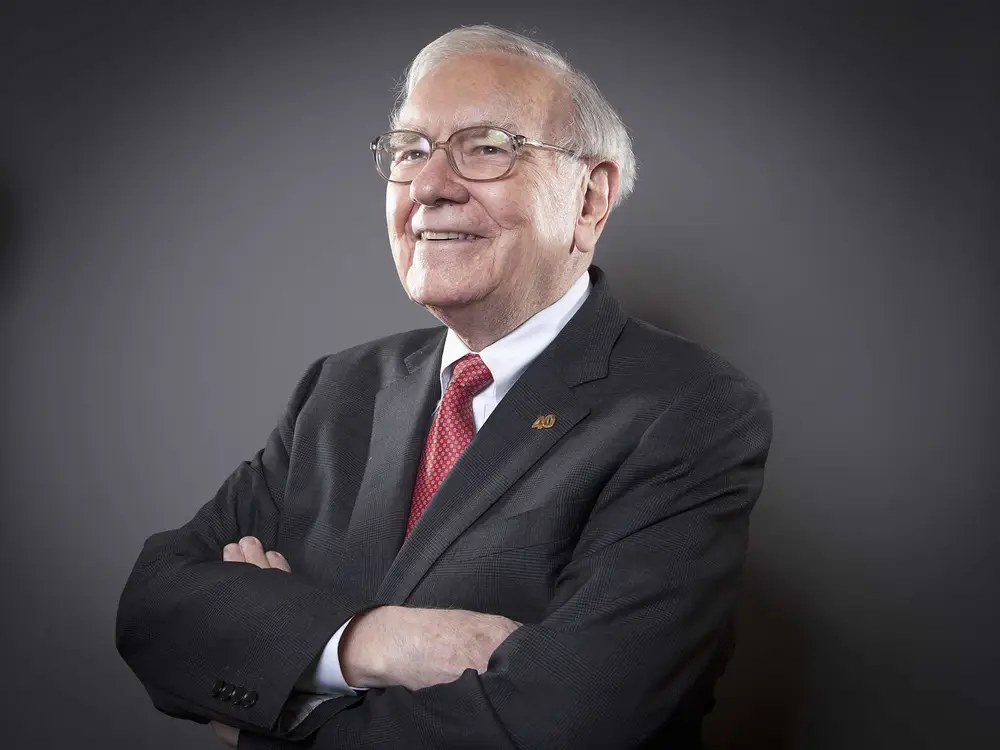
2. Warren Buffett: The Oracle of Omaha 

Estimated net worth: $104.6 billion (2022) 

Source of wealth: Investing 

Warren Buffett, often hailed as the Oracle of Omaha, stands as a beacon of value investing. As the chairman and CEO of Berkshire Hathaway, Buffett’s patient and disciplined approach has seen him accumulate vast wealth over the decades. His sage advice and long-term investment strategy make him not just a trader but an iconic figure in the world of finance. 

Warren Buffett
source: Business Insider

3. Jesse Livermore: The Legendary Stock Trader 

Estimated net worth: $100 million (1929, adjusted for inflation) 

Source of wealth: Stock trading 

The early 20th century saw the rise of Jesse Livermore, a legendary figure in stock trading. Livermore’s career was marked by astounding successes and heartbreaking losses. His uncanny ability to read market trends earned him immense fortunes, but the volatile nature of trading eventually took its toll. Livermore’s legacy is one of both triumph and tragedy, showcasing the unpredictable nature of financial markets.

Jesse Livermore
source: Analyzing Alpha

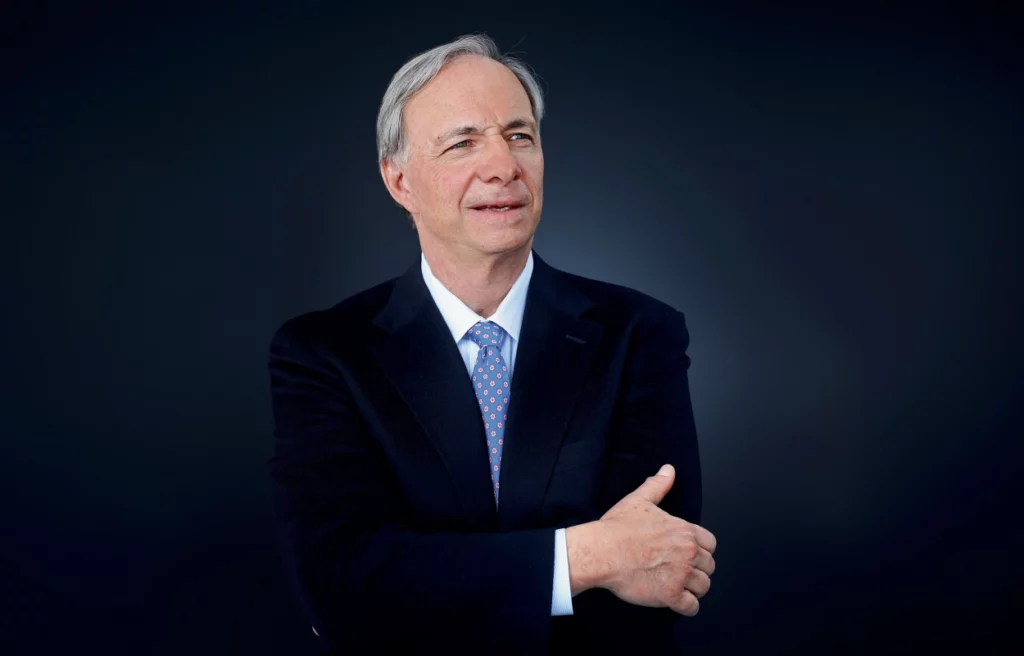
4. Ray Dalio: Mastering Macro Trends 

Estimated net worth: $16.9 billion (2022) 

Source of wealth: Hedge fund management 

Ray Dalio, the founder of Bridgewater Associates, has left an indelible mark on the hedge fund industry. Known for his expertise in macroeconomic trends, Dalio’s risk management strategies have propelled Bridgewater to become one of the largest and most successful hedge funds globally. His insights into the broader economic landscape have earned him a reputation as a thought leader in the financial world. 

Ray Dalio
source: Fortune India

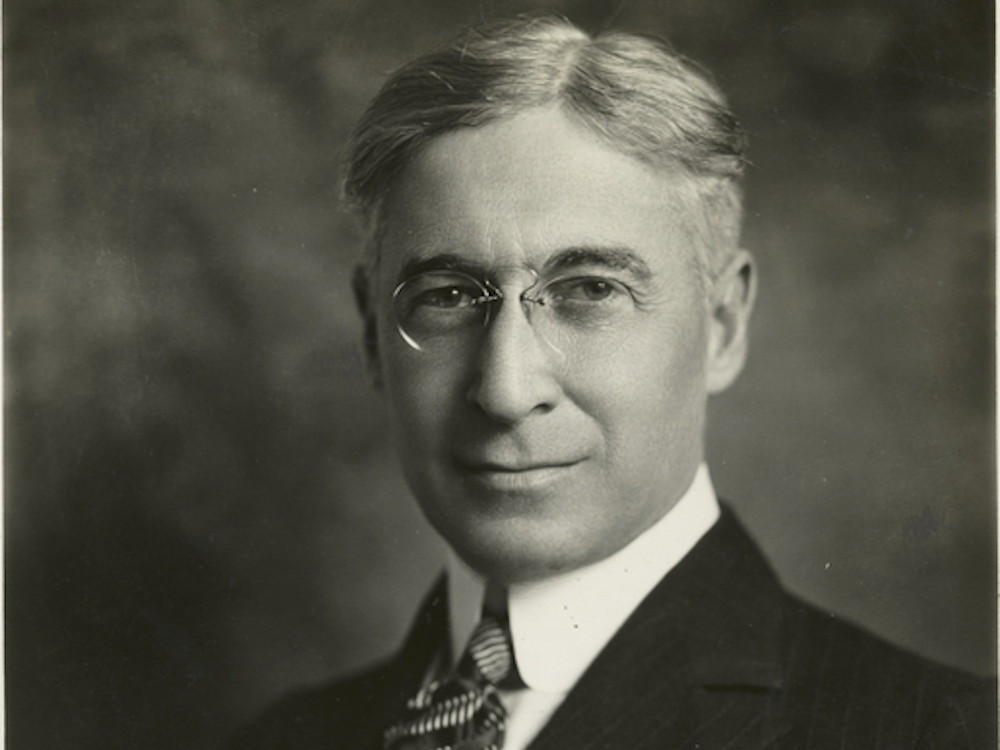
5. Bernard Baruch: The Presidential Advisor and Financier 

Estimated net worth: $200 million (1955, adjusted for inflation) 

Source of wealth: Investing, stock trading 

In the early 20th century, Bernard Baruch, a distinguished financier and trusted advisor to multiple U.S. presidents, emerged as a significant figure whose impact resonated in both financial and political spheres. His accomplishments extended beyond successful trading ventures to encompass a pivotal role in shaping economic policy, particularly during times of crisis. Baruch’s unique position at the intersection of finance and politics highlighted the depth of his influence and the critical role he played in navigating the challenges of his era. 

Bernard Baruch
source: Zocalo Public Square

6. William Delbert Gann: Pioneering Technical Analysis 

Estimated net worth: $100 million (1940, adjusted for inflation) 

Source of wealth: Trading commodities, stocks, and currencies 

William Delbert Gann’s contributions to technical analysis are nothing short of revolutionary. Gann’s innovative techniques, including Gann angles and the Square of Nine, have become cornerstones of market forecasting. His work laid the foundation for a more systematic approach to understanding and predicting market movements. 

William Delbert Gann

7. Richard Dennis: The Turtle Trader Experiment 

Estimated net worth: $200 million (2014) 

Source of wealth: Trading commodities 

Richard Dennis, a commodities trader, gained fame for his unconventional approach to trading. The Turtle Traders experiment, where he trained novices to become successful traders using specific rules, demonstrated the potential of systematic trading strategies. Dennis’s experiment challenged conventional wisdom and showcased the power of disciplined trading. 

Richard Dennis
source: Trusted Broker Reviews

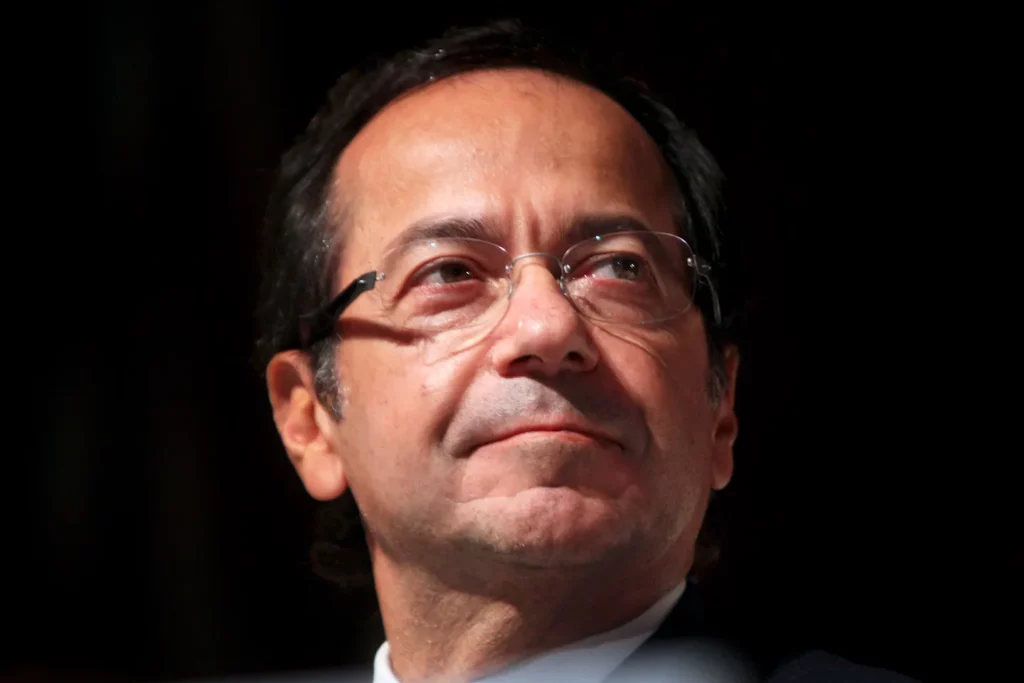
8. John Paulson: Profiting from the Subprime Mortgage Crisis 

Estimated net worth: $22 billion (2022) 

Source of wealth: Hedge fund management 

John Paulson gained widespread recognition for his successful bets against the subprime mortgage market in 2007. His prescient moves not only protected his hedge fund from the financial crisis but also earned it billions of dollars in profits. Paulson’s strategic thinking during turbulent times highlights the importance of adaptability in the ever-changing world of finance. 

John Paulson
source: Vanity Fair

9. Paul Tudor Jones: Predicting the 1987 Stock Market Crash 

Estimated net worth: $5.5 billion (2022) 

Source of wealth: Hedge fund management 

Paul Tudor Jones, a pioneer in global macro trading, made a name for himself by accurately predicting the 1987 stock market crash. The founder of Tudor Investment Corporation, Jones has consistently demonstrated his ability to navigate volatile markets and capitalise on major economic shifts. 

Paul Tudor Jones
source: National Audubon Society

10. Jim Simons: The Quantitative Trading Maestro 

Estimated net worth: $23.5 billion (2022) 

Source of wealth: Quantitative investment management 

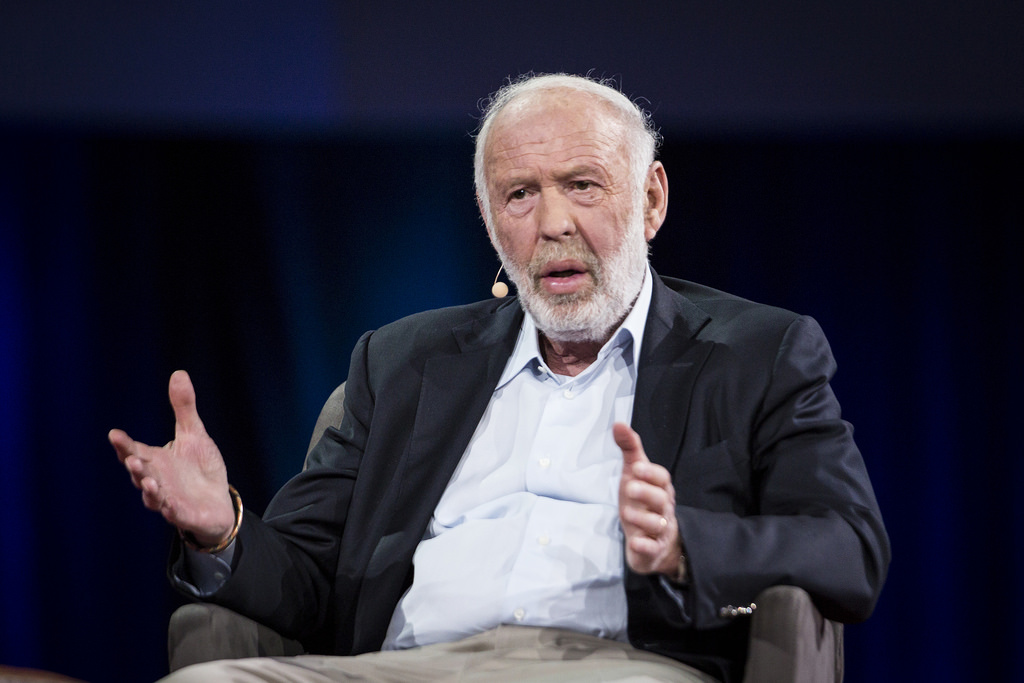
Jim Simons, a mathematician turned hedge fund manager, founded Renaissance Technologies and revolutionised quantitative trading. Simons’ success in developing complex algorithms and employing mathematical models has consistently delivered high returns, solidifying his place as a trailblazer in the world of quantitative finance. 

Jim Simons
source: Just Trading

In the intricate tapestry of financial history, master traders have crafted tales of risk, reward, and resilience – stories that caution and inspire. Beyond the allure of screens, the real magic unfolds in the strategic minds of those who conquer markets. If you’re inspired to start your own trading journey and seek outstanding results, take the first step by opening a live account with VT Markets. Just as legendary traders paved their way, this platform can be your foundation for financial success. Open your account and begin crafting your narrative in the dynamic world of trading. 

Week Ahead: Markets to Focus on US Jobs Report and Rate Statements from RBA and BOC

Various events are set to impact the markets this week, most notably the rate decisions of major central banks including the Reserve Bank of Australia and the Bank of Canada. Traders are advised to exercise caution and stay informed about the latest developments to ensure a successful week of trading.

Here are the upcoming market highlights for the week:

Reserve Bank of Australia Rate Statement (5 December 2023)

The Reserve Bank of Australia raised its cash rate by 25 bps to 4.35% in November after maintaining it at 4.1% following its previous four meetings.

Analysts predict that the central bank will keep its cash rate at 4.35% after its upcoming meeting on 5 December.

US ISM Services PMI (5 December 2023)

The Institute of Supply Management (ISM) Non-Manufacturing PMI—also known as the US ISM Services PMI—fell to 51.8 in October, the lowest in five months.

Updated figures will be released on 5 December, with analysts expecting an updated PMI of 52.

Australia Quarterly Gross Domestic Product (6 December 2023)

The Australian economy expanded by 0.4% in Q2 2023.

Analysts predict that the data for Q3, scheduled to be released on 6 December, will indicate slower expansion at 0.3%.

Bank of Canada Rate Statement (6 December 2023)

The Bank of Canada kept the target for its overnight rate at 5% following its October 2023 meeting.

Its next rate statement is scheduled to be released on 6 December, with analysts anticipating that the rate will remain at 5%.

US Jobs Report (8 December 2023)

The US economy added 150,000 jobs in October, a decrease from the 297,000 jobs added in September. Meanwhile, the unemployment rate increased to 3.9% in the same period, slightly exceeding the previous month’s figure of 3.8%.

Updated figures will be released on 8 December, with analysts forecasting the addition of 180,000 more jobs and an unemployment rate of 3.9%.

University of Michigan Consumer Sentiment Index (8 December 2023)

The University of Michigan Consumer Sentiment Index for the US was revised to 61.3 in November from a preliminary figure of 60.4, but it still remained at its lowest level since May.

Updated figures will be released on 8 December, with analysts expecting the index to hit 61.8.

Notification of Server Upgrade – December 1, 2023

Dear Client,

As part of our commitment to provide the most reliable service to our clients, there will be server maintenance this weekend.

Maintenance Hours :
2nd of December 2023 (Saturday) 00:00-05:00 (GMT+2)

Please note that the following aspects might be affected during the maintenance:

1. The price quote and trading management will be temporarily disabled during the maintenance. You will not be able to open new positions, close open positions, or make any adjustments to the trades.

2. There might be a gap between the original price and the price after maintenance. The gaps between Pending Orders, Stop Loss and Take Profit will be filled at the market price once the maintenance is completed. If you don’t want to hold any open positions during the maintenance, it is suggested to close the position in advance.

3. Please refer to MT4/MT5 for the latest update on the completion and market opening time. Our services will be back online once the maintenance is completed.

Thank you for your patience and understanding about this important initiative.

If you’d like more information, please don’t hesitate to contact info@vtmarkets.com

Dividend Adjustment Notice – December 1, 2023

Dear Client,

Please note that the dividends of the following products will be adjusted accordingly. Index dividends will be executed separately through a balance statement directly to your trading account, and the comment will be in the following format “Div & Product Name & Net Volume ”.

Please refer to the table below for more details:

The above data is for reference only, please refer to the MT4/MT5 software for specific data.

If you’d like more information, please don’t hesitate to contact info@vtmarkets.com.

Dividend Adjustment Notice – December 1, 2023

Dear Client,

Please note that the dividends of the following products will be adjusted accordingly. Index dividends will be executed separately through a balance statement directly to your trading account, and the comment will be in the following format “Div & Product Name & Net Volume ”.

Please refer to the table below for more details:

The above data is for reference only, please refer to the MT4/MT5 software for specific data.

If you’d like more information, please don’t hesitate to contact info@vtmarkets.com.

Back To Top
server

Bonjour 👋

Comment puis-je vous aider ?

Discutez immédiatement avec notre équipe

Chat en direct

Démarrez une conversation en direct via...

  • Telegram
    hold En attente
  • Bientôt disponible...

Bonjour 👋

Comment puis-je vous aider ?

Telegram

Scannez le code QR avec votre smartphone pour démarrer un chat avec nous, ou cliquez ici.

Vous n’avez pas l’application ou la version de bureau de Telegram installée ? Utilisez plutôt Telegram Web .

QR code